
Most of the time signs, coffee cups, posters, etc will finish the quote I used as my title. It can be found in Philippians 4:13 and the entire verse is “I can do all things through Christ who strengthens me”. What is interesting to note is that an athlete like Steph Curry often uses this verse during games. He will write it on his shoes or uses under armour to produce clothes that say “I can do all things” without finishing the entire verse. His influence can easily lead someone toward a viewpoint of this verse that is incorrect. Even if the entire verse is used, “through Christ who gives me strength”, there is still a strong possibility for misuse.
Since this scripture is so widely quoted and used in art, culture, and for inspiration it is likely we have an idea of what this verse means but have never thought about more than just a simple “that’s nice” thought. We might think “I can run a marathon in Christ who gives me the power to do so”, or “I will be able to tolerate work through the power of Christ”. In short, whatever obstacle or goal we have we are led to believe that we can overcome or achieve that something because Jesus gives us the strength to do so. For someone like Steph Curry, this would look like winning an NBA championship or getting NBA MVP honors. For you, it could be something as simple as raising a family and paying bills, or something that is harder to deal with like the loss of a child or a terminal diagnosis. We see this verse as a promise that those who are in Christ are able to overcome anything that might stand in their way between them and peace or triumph.

However, like all scripture that is pulled from context, this thought process is not what Paul is writing about in Phillippians 4. In verses 11 and 12 Paul says that he has learned to be content in any circumstance, no matter if it is being hungry, thirsty, having plenty, or being in need. He writes Phillippians while under arrest in chains (Phil 1:13-14). This means that Paul being hungry, thirsty, beaten, and imprisoned is saying he can endure all these in Christ. In our western minds, I feel his overall message is missed on us, though, if we stop here. The reason is this “is it possible to find contentment in any circumstance if we have our friends and family by our side walking through the dark days of life with us”? If so, then our strength to find contentment is not in Christ but in our friends.
The issue is that in our friends and family we will only find contentment that is fleeting. Our deep desire is to always be content. This neverending peace can only be found in something that does not fade or pass away. If we are to be at peace in any circumstance and have that peace last forever it must be a peace that comes from Jesus. It is only in Jesus that we are given strength enough to sing “it is well” when we have seemingly lost everything. The following is a brief recount that led Horatio Spafford to pen the Hymn “it is well”
On 22nd November 1873, while crossing the Atlantic on the steamship, Ville du Havre, their vessel was struck by an iron sailing ship. Two hundred and twenty-six people lost their lives, as the Ville du Havre sank within only twelve minutes.
All four of Horatio Spafford’s daughters perished, but remarkably Anna Spafford survived the tragedy. Those rescued, including Anna, who was found unconscious, floating on a plank of wood, subsequently arrived in Cardiff, South Wales. Upon arrival there, Anna immediately sent a telegram to her husband, which included the words “Saved alone….”
Receiving Anna’s message, he set off at once to be reunited with his wife. One particular day, during the voyage, the captain summoned him to the bridge of the vessel. Pointing to his charts, he explained that they were then passing over the very spot where the Ville du Havre had sunk, and where his daughters had died. It is said that Spafford returned to his cabin and wrote the hymn “It is well with my soul” there and then, the first line of which is, “When peace like a river, attendeth my way..” There are other accounts that say that it was written at a later date, but obviously, the voyage was one of deep suffering and is the clear inspiration for the moving and well-loved hymn. Horatio’s faith in God never faltered. He later wrote to Anna’s half-sister, “On Thursday last, we passed over the spot where she went down, in mid-ocean, the waters three miles deep. But I do not think of our dear ones there. They are safe….. dear lambs”.
Taken from Bethel, Ripon, North Yorkshire church website
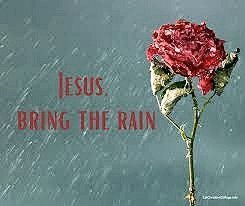
MercyMe writes these lyrics in “Bring the Rain”
…But instead I draw closer through these time
So I prayBring me joy, bring me peace
Bring the chance to be free
Bring me anything that brings You glory
And I know there’ll be days
When this life brings me pain
But if that’s what it takes to praise You
Jesus, bring the rain
Someone who endures life’s greatest tragedies yet is able to do so with a song on their lips no matter if it is sung in a minor chord and praise their savior can only do so through the strength Jesus provides. Phil 4:13 is not a call for self-reliance with a little bit of Jesus sprinkled in. Phil 4:13 is a call to worship Jesus no matter the circumstance because Paul knew that it would be only through this response to all circumstances that we would be able to find true everlasting peace.
One of my favorite quotes is this:
“I have learned to kiss the waves that throw me up against the Rock of Ages”
Charles Spurgeon
What Charles and MercyMe are both advocating for is the invitation to go through the worst that life has to throw at them. They both realize that it is through suffering that one’s faith truly shines through. Tragedy is an opportunity to demonstrate Christ to others, and every Christian should stand and volunteer for these chances to show the peace that passes all understanding (Phil 4:6) that is found only in the strength of Christ. If a Christian whines and complains about how their life isn’t fair this reaction minimizes God and shows that we do not truly understand the tragedy of the cross. However, if a Christian endures all hardship with praise and thanksgiving they are showing how their savior is stronger and above all human suffering and is more powerful than anything we might find in life.
What Paul is getting at in Phil 4:13 is the idea of “I can endure all things in Christ who gives me the strength to continue to worship Him even in the face of hardship and tragedy like being hungry, thirsty, imprisoned, tortured, etc.” When we quote this scripture we are affirming that we can also worship God through the loss of a child or even our entire family and invite the opportunity to demonstrate this commitment to Jesus since it is only in Him we find neverending peace.

 Ransomed Ragamuffin