
Scouring the internet I found a lot of blogs, sites, videos, books, anything you can imagine based on the topic “why I do not believe in God”. I did not do a scientific literature review on this topic to confirm what objections were the most common but a few did seem to stand out or were the most common reason cited. Now, I will admit, these answers I am trying to provide for said objections are not inclusive. In fact, I would imagine, after reading an answer there would arise more questions or flat refusal to acknowledge the counter-argument. A person is allowed to adhere to any belief system they choose and I am not one to try and “win” someone over as if trying to win an argument. This would just mean that there would be a loser and I am quick enough to admit that person could be me. My only hope is that, at least, the Christian worldview could be a viable option with clear reasoning. If you find you want to read more about the subjects I am addressing, I would highly recommend books by people much smarter than me. To name a few Ravi Zacharias, CS Lewis, Lee Strobel, J Warner Wallace, Frank Turek, John Lennox (has debated Richard Hawkins for a point by point discussion of different worldviews This is a link to one of their debates), Josh McDowell, Sean McDowell, I could go on but these are only a few of my favorites. For a longer list with links to their websites, you can visit this page 100 greatest apologists.
Before I begin I would like to say that the best piece of apologetics advice I ever received is to find out the “why” behind the question. How we get to that is usually through asking further questions. By asking these questions it would disarm the questioner somewhat by requiring them to think about something else other than attack. It also shows the questioner an attempt is being made to understand where they are coming from which, in turn, may lead to some concession and diminished hostility.
Objection 1: If God is good why is there so much evil in the world?

First, it is essential to identify what kind of evil are we talking about? Most of the time this question is in reference to morality. What I mean by this is that murder, rape, theft, etc. are all seen as evil. So when a person is asking about evil the natural assumption is to identify why God would allow someone to do something “evil” against another person.
Sometimes though this is brought up in terms of natural disasters. As in a natural disaster is the cause of the evil. What is interesting to note is that a natural occurrence is not capable of evil. Why? it has no moral bearing. A hurricane is no more capable of an evil act than the sand on a beach. The reason we say a natural disaster is evil is that it takes human life. This question, therefore, assumes value to people that supersedes plant and animal life (no one asks about the evil of a tornado in reference to the deer in the forest). If a person has no value then why call the natural disaster evil? Would we get upset at a forest fire for killing a colony of ants? No way! Why? the ants have little or no value to us. Yet a flood or tornado levels a building killing 35 people and we begin to ask why could God not have stopped this? One thing to mention God never promises to withhold the storm but He is the one that provides us with the ability to make it through the storm. Mt 5:45 says “…He causes his sun to rise on the evil and the good, and sends rain on the righteous and the unrighteous”. Belief in God will not stop the natural occurrences nor will disbelief in Him stop them. Either way, natural disasters WILL continue regardless of one’s belief in God. What believing in Him does is provide those who are His children an anchor in those storms. The storms do not stop but they are able to hold on to a promise the He will see them through. Without this promise, there is no reason, assurance, or understanding of these disasters. We are left with this description by Richard Dawkins from “A River Out of Eden”

In a universe of electrons and selfish genes, blind physical forces and genetic replication, some people are going to get hurt, other people are going to get lucky, and you won’t find any rhyme or reason in it, nor any justice. The universe that we observe has precisely the properties we should expect if there is, at bottom, no design, no purpose, no evil, no good, nothing but pitiless indifference.”
No matter what we believe, these things will happen, what we believe to be true will provide us with either hope or indifference.
Further, natural occurrences are an important part of our ecosystem. This earth and life on it are dependent on plate tectonics. There is some interesting new research from Penn State that this may not be the case for an inhabitant world. However, for this planet, plate tectonics are necessary for life to flourish. Why? without them, there are no volcanos. Volcanos have long been believed to be the reason we have an atmosphere. Our atmosphere exists because of volcanic eruptions. Further, it is because of colliding continents that earth was able to arise from the ocean. Couple that with the volcanos and we have an explanation why we have solid ground and not completely covered with water.
Weather patterns cause temperatures to be distrusted somewhat evenly throughout the globe so most of the world can be inhabitable plus this is how water is dispersed throughout the world and not just central to large bodies of water. Without weather, life as we know it would not exist. Because of these necessary aspects of life, we will have hurricanes, tornados, earthquakes, floods, volcanos, etc. in order for life to exist we need these natural occurrences. When they do occur it is how we view the world that will determine how we handle them when they come. Christianity offers hope and life while anything else offers only “pitiless indifference”.
But most people want to talk about a moral good or evil. We want to understand how a loving God would allow someone to walk in a building and shoot several innocent people. We all have a sense of what is right and what is wrong. What is interesting is that this question itself, Ravi explains, actually provides proof for God. His reasoning goes like this:

“When you say there’s too much evil in this world you assume there’s good. When you assume there’s good, you assume there’s such a thing as a moral law on the basis of which to differentiate between good and evil. But if you assume a moral law, you must posit a moral Law Giver, but that’s Who you’re trying to disprove and not prove. Because if there’s no moral Law Giver, there’s no moral law. If there’s no moral law, there’s no good. If there’s no good, there’s no evil. What is your question?”
It is only through a belief in God that someone can say something is evil. By saying something is evil they are assuming there is also good. But there can only be one who is good and only one who can create a being that can identify what that good is and that one is God.
Saying this in another way and more eloquently than I could ever hope for is C.S. Lewis from Mere Christianity

My argument against God was that the universe seemed so cruel and unjust. But how had I got this idea of just and unjust? A man does not call a line crooked unless he has some idea of a straight line. What was I comparing this universe with when I called it unjust?
So why couldn’t God create a group of people that either only knew good or only did the right thing? Because He loves us and wants us to love Him back. If someone is to be created to be able to love fiercely, they must also be free to choose to demonstrate that love. Sadly, the more capacity something has to love the more their capacity for evil. An ant cannot love, but how much evil can an ant do? A dog can demonstrate love but only to a certain degree, but a dog is also capable of “minor evil” (biting the hand that feeds it for example). A person can love deeply and passionately. But we also can hurt, destroy, embarrass, harass, torture, and kill. Without this, there is no choice. It is horrific to say but it is true: giving us the choice to love we are also given the choice to hate. Sadly, more people choose hate over love, we choose ourselves over God
So let me ask this. Would you want to be with someone who had no choice but to love you? what kind of relationship would that be? God wants the same from us. To choose to love Him. The above explanation is far from complete it is just one that provides a tiny bit of light to a very difficult issue.
Objection 2: God is homicidal and genocidal. Why worship anything that destroys civilizations?

This objection often refers to the Egyptians as discussed in the book of Exodus. Or it can refer to Noah’s Flood in the destruction of so much life. Or some other OT story.
First understanding God’s motivation has to deal with moral concerns. We know that God is merciful, loving, holy, righteous, fair, just, He does not rush to judgment, He is slow to anger, and filled with unfailing love, He will also judge the nations with His truth (Ps 145:17, Rev 3:7, Ps 119:137-138, Ps 103:8, Ps96:13 just to name a few). For God to be loving He also has to be just.
Think about this, if your daughter was raped and/or murdered, the love you have for your daughter would drive you to seek punishment against her attacker. How could a parent say they love their daughter while at the same time ignore the justice that is demanded on that criminal?
In Genesis 15 beginning in verse 16 we see that God is telling Abram (later Abraham) that his people will be oppressed for 400 years. Because the land that was promised to him was filled with Canaanites whose “inequity” had not reached its full measure. Consider this, in America slavery lasted 250 years. In 1619 the first slaves arrived in Virginia and in 1865 the civil war ended slavery thus bringing an end to this practice. Today there are calls for monument removal and a ban on the rebel flag. Imagine if this lasted from 1618 to 2018 (400 years). What would the outcry be today?. The oppression, abuse, mistreatment, would only continue to become more violent with each passing year. The only way to end something so entrenched in society would be by an “act of God”. Slavery under Egyptian rule was wicked and violent. So, we see God destroying the Egyptians for their abuse and oppression of an entire people group, yet today we use this against God as He was being unjust toward the Egyptians.
If God had continued to allow the Egyptians to abuse the Hebrews we would be asking why did not God step in and rescue the oppressed. It is the kind of argument that paints God into a corner that He can not win in our justification. But it is not our justification that He adheres to but His alone.

Secondly, it took 400 years for the Canaanites to fully realize the punishment for their iniquities. For 400 years God sent the Canaanites warnings about their need to repent but they never did. for 400 years they practiced child sacrifice (Lev 18:21 and 20:5, 2Kgs 16:3, 21:26, 23:10, 2Chr 33:6; Ex 16:21…). In order to guarantee blessings from the Canaanite God Molech, the Canaanites burned their firstborn children on an altar designed to look like him. On top of this, the Canaanites practiced bestiality, frequent incest and adultery, Idolatry, and homosexuality (not what we think of today. But in order to show dominance over another man the first man would rape the second. It was a way of saying “you’re mine. I own you”). This went on for 400 years! If anything I would say “why so long, Lord, did you wait to destroy such a perverted culture”?
Recently and ongoing we have been dealing with the problem of ISIS. So many of us would love to see these people destroyed for their barbaric treatment of children, women and each other. As stated above we seem to have an internal compass that tells us we must value life. When someone or a nation violates a person and devalues them we cry out for justice. How is God any different? If anything, as shown through scripture, God is very patient even in the OT toward those who would seek to destroy others.
Here is the point, we can not want justice against those who are wicked while at the same time when that justice is delivered, say that God was too harsh. Nor can we demand God continue to allow injustices because He needs to show His love toward the wicked while at the same time question why He does not do something to save those who are innocent from the hands of their oppressors. So what does God do? He gives everyone every opportunity to turn from their wickedness and turn to Him. He gave the Egyptians and the Canaanites 400 years. He gives us a lifetime but at some point, in order to be a just God, He MUST deal with wickedness and deal with it He will!
Objection 3: I just don’t need to believe in Christ.
This is a statement that will bring in the top two explanations to a point. For instance, we know that there is an objective good and objective evil. We all instinctively know that the involuntary loss of life (murder) is evil. While caring for those who are unable to care for themselves would be morally right. The problem here is that we all believe we fall on the morally good side. We all are expert justifiers of the evil we do. The terrorists in Aleppo believed they are doing what is necessary to bring forth the Kingdom of Allah by destroying anyone who denies Mohammad as a prophet and Allah as his God. In fact, this goes so deep that if someone does not believe in the same sect, even though they would say they are Muslim, the extremists will kill them as well. Their reasoning is that they are only causing a bit of harm to bring forth a greater promise. The ends justify the means. We can read this same justification in a manifesto, a book, or another medium that expresses the justification of the evil someone does.
At a smaller and less violent manner, we are all guilty of doing something we instinctively know is wrong or something we are not proud of. Maybe we called someone a nasty name or wished some unkindness toward them. Even inadvertently we may cause harm toward a loved one or friend. Even something we would consider small like a lie we know it is not right.
The problem is that God is holy. What does this mean? This means that He is perfect; there are no imperfections or hypocrisy in Him. Since every single person is made in His image His demand on us is nothing less than this level of perfection. When we hope harm comes to another we wish harm on someone who God loves. When we attack someone we are attacking someone who is loved by God. If someone repeatedly attacked someone you loved how would you react? would you allow this person to walk free or would you demand justice? Why should God be any different? But instead of the punishment being temporary it will be eternal.
This does not seem fair since we operate in the temporary. But the crime we commit is against the eternal God so therefore the punishment must also be eternal. The higher the importance someone has the greater the punishment against the perpetrator. Said in another way if someone were to kill a deer no one will say anything. If the animal is a family pet, they may get a fine for animal cruelty, if a person they could face 25 years in prison depending on the degree and in the manner of the death, if the president, there is no hope of “getting off light”. In fact, if need be, the entire country will pull all of its resources to find the killer. If the same crime was against a “regular” citizen there is a chance it would become a cold case since the country will not spend its resources on a victim of little notoriety.
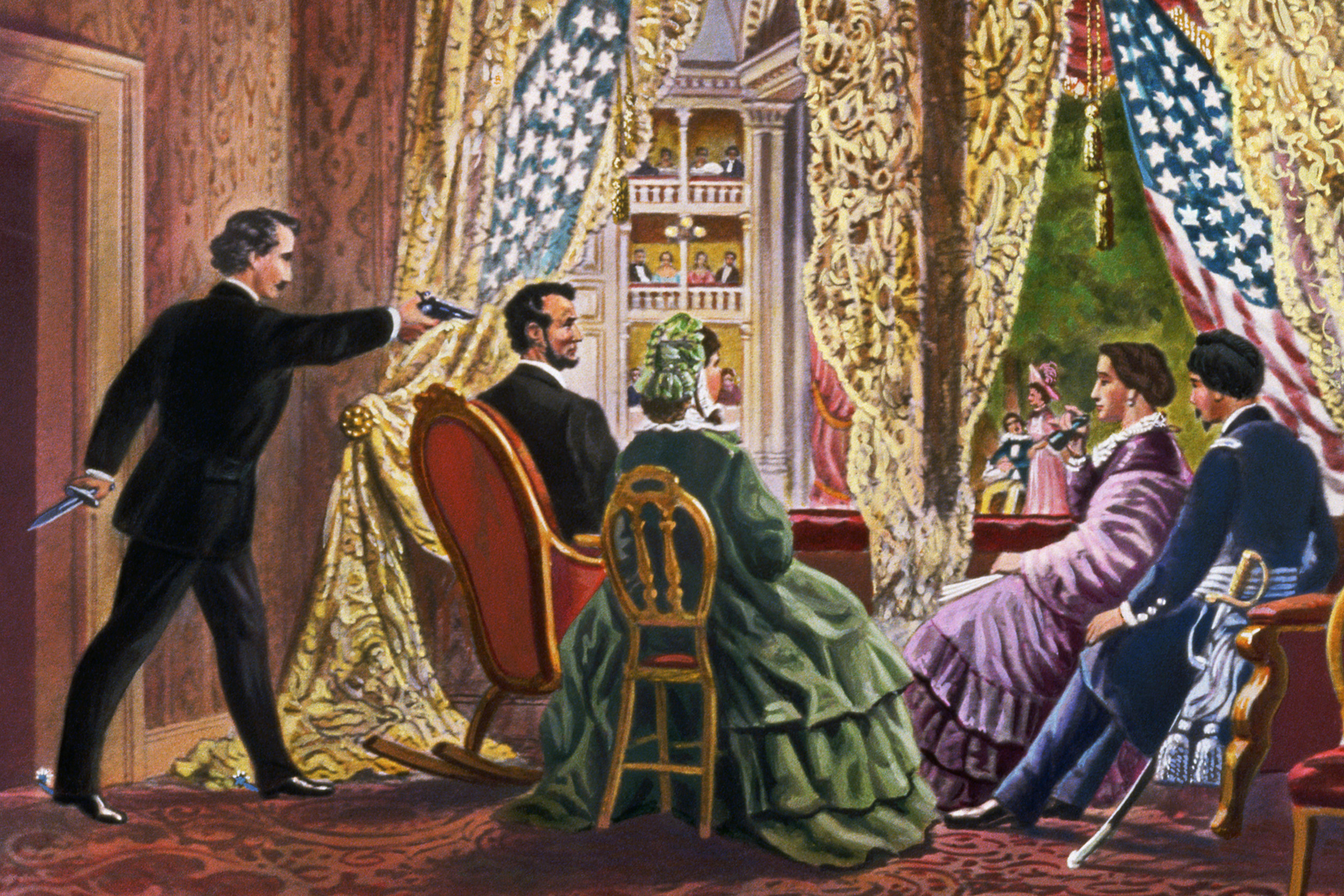
How much more or a punishment should there be against one that is even higher than the president? What punishment should there be when these crimes are against the one who is eternal? The only option is for an eternal penalty. But He loves us too much to allow this to be the final verdict.
Instead, one who was able to live a perfect life, on behalf of all people, stepped into our story and satisfied the wrath we deserved. Through His blood, our entry into eternal life was purchased. Through His resurrection, God confirms His acceptance of Jesus’ blood as the price that was to be paid for all the evil we would commit. From killing each other to lying to one another all of it was paid for by His blood.
This means there are only two options. Accept this is true or not. It is not as if He has given us nothing but “blind faith” top confirm this truth. In fact, there is a bunch of evidence that helps prove His sacrifice was an actual event and this can be trusted. For instance, pericardial effusion is basically the fluid build up around the heart that prevents the heart from beating effectively, called cardiac tamponade. This occurs under extreme stress. a first century Jew did not understand this so it seems like a fairy tale or a miracle when we read from John 19:3
one of the soldiers pierced Jesus’ side with a spear, bringing a sudden flow of blood and water.

We know that the spear that pierced Jesus’ side would have ruptured this fluid sac, as well as His heart, and what would look like water as well as the blood, would have flowed out. What we know about anatomy today confirms what was written 2,000 years ago.
There are many more pieces of evidence than this that help to confirm Christ was who He said He was and He can be trusted. We just have to accept the evidence as truth and believe the evidence or deny it and fall under the punishment of God Himself.
We do need Jesus otherwise our eternity will be spent apart from the only one who can provide the life we need.

 Ransomed Ragamuffin