
Several years ago Kenny Chesney wrote a song called “Everyone Wants to Go To Heaven”. Which is not only a good song, in my opinion, but also a pretty accurate statement. Sadly, it is not necessarily true since some Atheists view God, if there was one, as a malicious and abusive entity. So if pressed they would not want to spend an eternity with a being that is so evil, if one did, in fact, exist. However, this viewpoint is in the minority. Most people would want to go to Heaven and each seems to be trying to find their own way in how to accomplish this.

For example, someone in the far east may believe that Karma sets everything in balance here and now and is the ultimate determinate of what happens to a person after they die. If a person has done enough good in their life, they will be rewarded. Whereas a person who has done more evil things they will be punished.
In Islam, the pursuit of eternal reward is always about pleasing a wrathful far off diety. However, one can never really know if God is pleased with them or not. The best anyone can hope for is that they were viewed as good by observing the laws Allah has outlined in the Koran and follow the traditions in the Hadith. If someone found favor with God, they will be welcomed into Heaven while those who denied Allah will not gain entrance.
Judaism views entrance into Heaven as adherence to the law. The Torah, first 5 books of the Old Testament, outlines the qualifications of a devout Jew and what they need to do to be counted among the righteous that will be counted as those who will receive the blessings from the Abrahamic covenant.
Granted there are many more beliefs and faiths that would be more than eager to share their idea of how one can attain eternal bliss after this life. Each one is complex, and even the examples mentioned above offer only a rough overview of a more complex belief system. However, each one is basically the same; be a good person, obey the rules, help those who are worse off than you, use kind and uplifting words, and you will be guaranteed a reward beyond this life. In fact, most faiths will teach that people, at their core, are good and it is each of our responsibilities to live up to the good that is already in us. A failure to live up to this good will result in punishment and those who are able to live up to this good they will be rewarded. In some form or phrasing, this is true for all beliefs except Christianity.

Christianity at its core teaches that all people are evil. Consider the following verses.
Jerimiah 17:9 The heart is deceitful above all things and desperately wicked. Who can really know how bad it is?
Romans 1:21 For although they knew God, they neither glorified Him as God nor gave thanks to Him, but they became futile in their thinking and darkened in their foolish hearts.
Matthew 13:15 For this people’s heart has grown callous; they hardly hear with their ears, and they have closed their eyes. Otherwise, they might see with their eyes, hear with their ears, understand with their hearts, and turn, and I would heal them.
Ecclesiastes 9:3 …In addition, the hearts of people are full of evil, and madness is in their hearts while they live–after that, they go to the dead.
There are so many more verses that declare how evil people are. Yet when we begin to examine our own lives, we have a tendency to externalize this teaching by saying “this is about other people, I know my own heart and emotions and I know I am not that bad.” Basically, we all deny that we are evil at our core. This is why so many other faiths are more pleasing than what Christ taught. We want to hear how great or good we are and are more than willing to listen to any teaching that reinforces this thought. When confronted with the idea of how evil we are we tend to run as far from that kind of teaching and fight against it as much as possible. We want our good to be maximized and our bad minimized.

I would contend that this thinking also follows with Biblical teaching. Consider Mt 13:15 from above. People are not willing to see what is going on in their own lives. The turmoil that stirs within us mostly goes unchecked because we want to believe we are good but in reality we are not. Because of this denial, there is no healing that can take place. Christ is willing to heal and mend this wickedness but is unable to do so because we refuse to admit we are sick. In Matthew 9:12 Christ says “It is not the healthy that needs a doctor but the sick.” If a person is sick but refuses to go to a doctor what could the doctor possibly do to heal their patient. If we refuse to believe we are evil how can Christ save us from our evil desires?
The pushback against hearing how evil we are is intense. In fact, even if we believe there is a hint of truth to this we will automatically try to rationalize this evil by saying something like “I am not as bad as Hitler.” (I thought he would be a safe bet to not offend many people. But the person can be anyone, just fill in the blank with someone whom you believe you’re better than).
However, the evil that corrupts our souls begins with our thoughts. If our thoughts are evil, it is only a matter of time until these are acted upon. It seems that Yoda was on the correct path with this saying “Fear is the path to the dark side. Fear leads to anger. Anger leads to hate. Hate leads to suffering”. Some of the words need revising for this process, but the elements of this are still valid. A person does NOT become a murderer overnight. An adulterer does not fall into that trap overnight. A thief steals only after a long progression down a series of poor actions and thoughts.

Don’t believe me? Have you ever been so upset at someone you have said: “life would be so much better if they were not around”? You may have not said “I wish they would die” but the idea of someone not being around is a polite way of saying “I wish they were dead.” If someone were to consistently see personal injustices everywhere, how awful their life is, and how everyone is out to get them, these thoughts are what would lead to violent outbursts. By holding onto those thoughts and anger, a person will need to release that energy and will usually do it destructively. These thoughts, which may have started small, grow to produce an outward action. This is the reason Christ said
“You have heard that the ancients were told, ‘You shall not commit murder’ and ‘Whoever commits murder shall be liable to the court.’ But I say to you that everyone who is angry with his brother shall be guilty before the court; and whoever says to his brother, ‘You good-for-nothing,’ shall be guilty before the supreme court; and whoever says, ‘You fool,’ shall be guilty enough to go into the fiery hell”.
The reason he says this is two-fold one is that everyone is created in the image of God Himself. By speaking so negatively against another is like talking it to God Himself. So to call someone “Raka,” “idiot,” “stupid,” or “good for nothing” this is an indirect attack on God Himself. The second is this kind of thinking is what leads to action. A consistent thought process that is unforgiving and hostile will lead to a lifestyle where this thinking will be evident. Wishing someone dead, even in the heat of a moment, even though it is only a thought, is an attack on God which can also lead to a physical manifestation of that thought. By participating in ideas like this shows us how evil we are and what evil we are capable of.
If we are deeply honest with ourselves, admit that yes this is true, and we truly understand this evil. Christ would finally be able to say “Now I can heal you.” We just need to have a desire to change.
Still, don’t buy it? Let me ask a question. Out of everyone in the Bible to whom did Christ say “Today you will be with me in Paradise”? This was not spoken to those who are seen as good. Mary, the mother of Christ, never heard those words said to her, John, the disciple whom Christ loved, never heard those words, John the Baptist, Christ’s cousin did not hear that from Christ. We would be quick to believe that all these people were good people, however, the one who heard this was a person we would call evil.
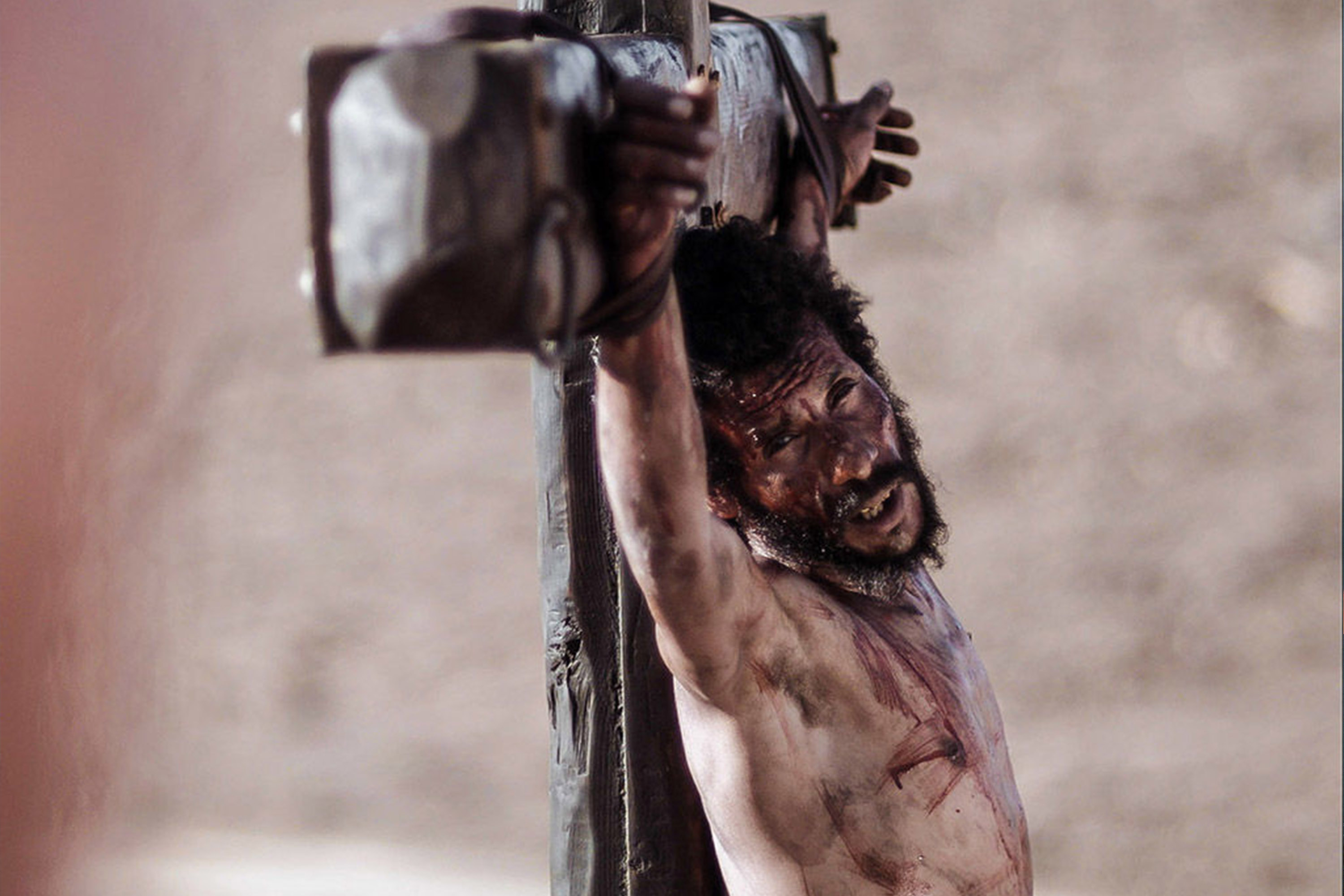
A thief whose crime was so bad the Roman government saw fit to hang him on a cross. This was the man who heard “today you will be with me in paradise.” It wasn’t the person who saw themselves as good or self-righteous. It wasn’t the religious elite, it wasn’t even Christ’s own family or disciples. But these words were spoken to the one who not only was evil but the one who saw his own evil while hanging with Christ. Time and again we see those who have known their own fallacies, and who’ve asked for forgiveness, as those who readily receive it. While those that refuse to admit their own evil are the ones that Christ ends up sending away. The one that believes they are good are the ones who will never hear “enter” when standing before the only one who can allow entrance.
Trust me there is so much more to forgiveness than this but how can one be forgiven if they are under the belief that they have done nothing to be forgiven of? How does one even begin the process of forgiveness if they see themselves as innocent already? If you believe you are a good person, I am afraid to tell you that there is no forgiveness for you.
Before you or I can ever enter Heaven, we HAVE to understand this one truth BEFORE any other. We are evil. Once we know this, we can then begin to seek forgiveness. We can find out how our evil is transformed and how our sick hearts are healed. If a Christian ever forgets this or if a non-believer refuses to believe it they will be cut off from God forever. There is no room in Heaven for a proud heart.

 Ransomed Ragamuffin