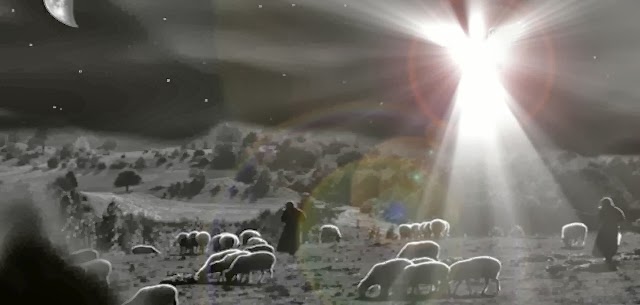
The First Noel, the Angels did say
Was to certain poor shepherds in fields as they lay
In fields where they lay keeping their sheep
On a cold winter’s night that was so deep.
Noel, Noel, Noel, Noel
Born is the King of Israel!
Every December no matter where you go you are guaranteed to see one nativity scene. This doesn’t matter how anti-Christian someone is they, at some point, will gaze upon a nativity scene. Each one has many of the same characteristics. Mary, Joseph, baby Jesus, angels, sheep, wise men, and of course the shepherds.
Each character is mentioned at some point in the story of the birth of Christ. For this reason, each one has its place at His birth. But have you ever wondered “why shepherds”? I’m sure you’ve heard the symbolism of how Jesus is our shepherd and we are like sheep. Or how the shepherds were the lowest class in the Middle East and how this means the message of Jesus is for everyone. Each is true but take a look at Luke 2. In verse 12 the angels speaking to the shepherds say
“This will be a sign to you: You will find a baby wrapped in cloth and lying in a manger”.
Have you ever thought about why would a baby laying wrapped in cloth lying in a manger be a sign to shepherds?
If you are like me, a baby wrapped in cloth is not a sign, that is what you do with a baby. I see wrapping a baby in cloth as normal. Baby’s get cold and wrapping them up is the best way for them to stay warm. Also, they had no bed so the best Joseph could do was to throw together a soft place for Jesus to lay in and the only thing he had was that manger. I mean what were Mary and Joseph going to do? Let Jesus lay in the middle of the barn floor unwrapped?
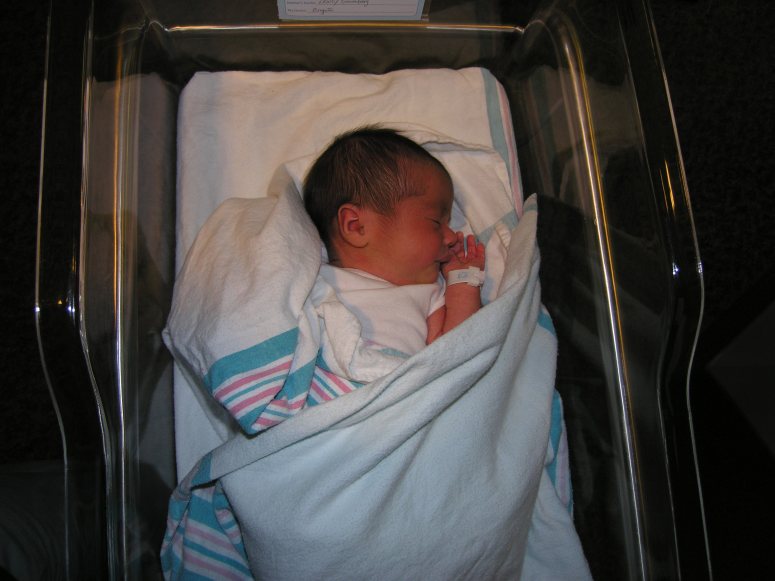
To me, this is not a sign, this is just smart parenting given the circumstances Mary and Joseph found themselves. In my head, this is the equivalent of someone telling me that the sign a baby who would become president is that they are born in a hospital and wrapped in a blanket with a cap on his head. Honestly, this isn’t a sign this is what smart parents do when caring for their baby.
But is there something more to these shepherds that we miss every Christmas? The answer to this question only makes Christmas even more special and hopefully even more meaningful, like it did for me.
The Old Testament specifically revolves God’s law and our inability to adhere to His law. Because of this inability to follow God’s law a sacrifice was needed to cleanse the people of this shortfall. Different sacrifices were represented of different sins, for example, a sin offering was presented for “unintentional” sin. This just means that God’s law was so much higher than we can imagine we would wind up sinning without us even realizing we did. Another example was the peace offering this was more an offering to God based not on sin but on our joy and fellowship with Him. This was performed by singing and shouting for joy to God. Even though this was not animal related (because it did not deal with sin) it was still the one God enjoyed the most.
The one that means the most when answering our question is the burnt offering. The burnt offering was a general sacrifice. A person would present the sacrifice to the priest as an acknowledgment of the individual’s inability to keep the law, also called sin. A male bull, sheep, goat, or dove would be used in this sacrifice and it had to be one without blemish. Once the sacrifice was made (an atonement) the person who presented the sacrifice to the priest would be forgiven of their sin. However, this sacrifice would only last until the person disobeyed the law again. Although this sacrifice could be made at any time there were specific times the Bible mentions as appropriate times to present such a sacrifice.

This is significant because the animals that were to be sacrificed must not have any blemish. When a baby sheep is born they tend to thrash around or fall from a height and end up bruised. These sheep would then be considered with blemish and not be appropriate for sacrifice.
Sacrifices, especially the burnt offering due to its frequency, had become such a big deal when Jesus was born that the priests had set up a position to ensure the safety and preservation of the animals. In fact, the average person would be able to buy the animal they would want to be sacrificed instead of carrying one all the way to Jerusalem during Passover (a common pilgrimage Jews took every year. The longer the trip the harder it would have been to bring the sacrifice with you). These animals would be sold at the synagogue and the person buying the animal would know it had been raised in such a way that no blemish befell that animal thus making it an acceptable sacrifice to God.
What these priests would do is catch the lamb, in cloth, as it was being born, to make sure it would not become bruised. The priest, after cleaning the lamb, would place the lamb in a soft secure place so it would not bruise itself as it began thrashing around. This safe place would be a crevice in a wall also called or a feed trough filled with hay also known as a manger.
From the first day of its life, these lambs were being prepared for a sacrifice.
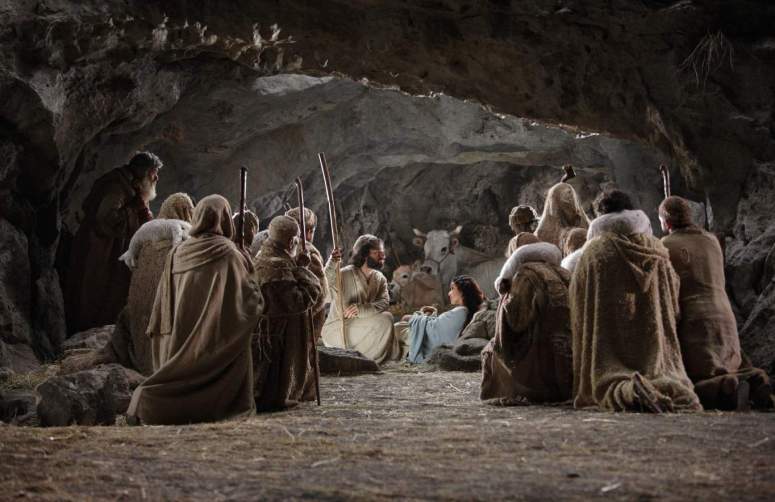
When these shepherds/priests saw baby Jesus wrapped in his cloth lying in a manger they would be reminded of their own lambs. The shepherds would see Jesus and realize, like their own lambs, that He was born to be a sacrifice. These shepherd/priests would understand the significance of His eventual sacrifice and know He was the one promised to the final atonement for the sins of the world. These men would see, on that night, the beginning of the end to the daily and ritualistic sacrifices, they would have been overcome from the sight of the angles in multitude singing His praises. They would have become so overcome with joy their knees would have gone weak and either out of complete astonishment, reverence, joy, or emotion that their faces would have been in the mud covered wood; but they wouldn’t care since they were worshiping the one who was born to be a sacrifice. They knew, once and for all, their sins against a holy and righteous God would forever be forgiven.

 Ransomed Ragamuffin